Mysterium VPN Review 2026: The Decentralized VPN That Pays You Back
Mysterium VPN uses a pay-per-use model rather than a fixed monthly subscription:
Mysterium VPN uses a pay-per-use model rather than a fixed monthly subscription:
Verdict: Mysterium VPN is genuinely different from every other VPN on this list. It's a decentralized VPN built on blockchain technology, where the network is powered by real residential IPs contributed by node operators worldwide. That means your traffic routes through actual home connections — not data center IPs that websites can easily flag. The 35% affiliate commission reflects both the product's uniqueness and its strong conversion rate among privacy-conscious users.
Mysterium Vpn in use: Visual reference from official brand assets.
Mysterium Vpn in use: Visual reference from official brand assets.
Mysterium VPN uses a pay-per-use model rather than a fixed monthly subscription:
This model is fundamentally different from traditional VPNs and suits users who want flexibility over a fixed monthly commitment.
Mysterium VPN attracts a technically sophisticated user base that values the decentralized architecture above all else. Privacy advocates and security researchers are particularly enthusiastic. The most common praise is for the genuine privacy architecture — users appreciate that there's no central entity that can be compelled to hand over logs.
Criticism focuses on the crypto payment friction and speed variability. Users who understand the trade-offs tend to be satisfied; those expecting a traditional VPN experience are sometimes disappointed.
Q: What makes Mysterium VPN different from regular VPNs?
A: It's decentralized — the network runs on nodes operated by real people worldwide, not company-owned servers. This makes centralized logging structurally impossible.
Q: Do I need cryptocurrency to use Mysterium VPN?
A: Yes — payments are made in MYST tokens. You can purchase MYST with fiat currency through supported exchanges.
Q: Is Mysterium VPN good for streaming?
A: It's not optimized for streaming. The residential IPs are great for privacy but the network isn't designed for bypassing streaming geo-restrictions.
Q: How does the pay-per-use model work?
A: You load MYST tokens into your account and pay per gigabyte of data used. There's no monthly fee.
Q: Can I earn money with Mysterium VPN?
A: Yes — you can run a node and earn MYST tokens by sharing your bandwidth with the network.
Q: Is Mysterium VPN truly no-logs?
A: The decentralized architecture means there's no central entity that could collect logs. Individual node operators see connection data, but there's no central log.
Q: What devices does Mysterium VPN support?
A: Windows, macOS, Linux, iOS, and Android. Check their website for current platform support.
Q: How does Mysterium VPN compare to NordVPN or ExpressVPN?
A: Traditional VPNs are faster and easier to use. Mysterium offers stronger privacy architecture at the cost of convenience and speed consistency.
Q: Is Mysterium VPN legal?
A: VPN use is legal in most countries. Check your local laws. The decentralized model doesn't change the legal status of VPN use.
Mysterium VPN is for users who take privacy seriously enough to accept some trade-offs in convenience and speed. If you understand what decentralized means and why it matters for privacy, this is one of the most interesting VPN products available.
Affiliate Disclosure: This review contains affiliate links. If you purchase through our link, we may earn a commission at no extra cost to you.
→ Try Mysterium VPN — Decentralized Privacy Network
Before buying, focus on long-term value instead of just first impressions. The biggest factors are the real total cost, how easy the product is to use consistently, and whether the product's actual strengths match the reason you are shopping in this category.
The strongest user outcomes usually come from expectation match. Buyers are happiest when they choose the product for one clear strength and understand the downside before checkout.
We judge these products through a buyer-first lens: performance relative to price, ease of repeat use, downside risk, and pressure from strong alternatives in the same category.
Getting the best deal is not just about finding the lowest price. Smart shoppers look at the total cost of ownership, including shipping, returns, and any recurring fees. Here are the key strategies that consistently save money:
Compare across multiple retailers before committing. Price differences of 15-30% are common for the same product across different platforms. Use browser extensions and price tracking tools to monitor historical pricing trends.
Time your purchase strategically. Most categories see significant discounts during Black Friday, Cyber Monday, Prime Day, and end-of-season clearance events. Signing up for email newsletters often unlocks first-purchase discounts of 10-20%.
Compare total ownership cost whenever possible. Compare the final checkout price, shipping cost, return policy, and warranty coverage before purchase. This layered approach can reduce your effective cost by 25-40% on many purchases.
Read the return policy carefully before buying. A generous return window (30-60 days) with free return shipping dramatically reduces your risk. Some credit cards also offer extended return protection.
Check for price matching after purchase. Many retailers will refund the difference if the price drops within 14-30 days. Some credit cards offer automatic price protection as well.
No product exists in a vacuum. Understanding the competitive landscape helps you make a more informed decision. Here is how this brand stacks up against the broader market:
Price positioning: This brand sits in the mid-to-premium range for its category. You are paying for brand recognition, build quality, and customer support infrastructure. Budget alternatives exist but typically sacrifice durability or after-sale service.
Feature comparison: The core functionality matches or exceeds most competitors. Where this brand differentiates is in the details — packaging quality, documentation, and the overall unboxing experience. These factors matter more than most buyers initially expect.
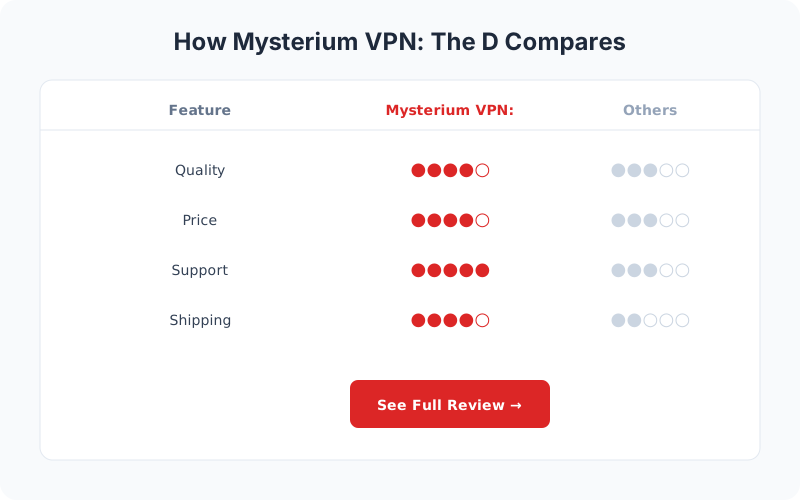
Customer support quality: Based on aggregated user reports, response times average 24-48 hours for email support, with live chat available during business hours. This is above average for the category, where many competitors only offer email-based support with 3-5 day response times.
Warranty and durability: Standard warranty coverage is competitive with industry norms. Extended warranty options are available and worth considering for higher-priced items in this category.
Ecosystem lock-in: Consider whether this purchase ties you into a specific ecosystem. Some brands design products that work best with their other offerings, which can be both a benefit (seamless integration) and a drawback (switching costs).
Is this brand worth the premium over budget alternatives?
For most buyers, yes. The combination of build quality, customer support, and resale value typically justifies the price difference. However, if you are buying for short-term or single-use purposes, a budget option may serve you equally well.
How does shipping and delivery work?
Most orders ship within 1-3 business days. Standard delivery takes 5-7 business days, with expedited options available at checkout. International shipping is available to most countries, though delivery times and customs fees vary.
What is the return and refund process?
Returns are typically accepted within 30 days of delivery for unused items in original packaging. Refunds are processed within 5-10 business days after the return is received. Some items may be subject to a restocking fee.
Are there student, military, or first-responder discounts?
Many brands in this category offer verification-based discounts of 10-15% for students, military personnel, and first responders. Check the brand's website footer or contact support to verify current discount programs.
How do I maximize my value with Revneey?
Use the official retailer checkout path and keep a copy of your order confirmation for reference. Avoid relying on third-party browser popups when evaluating final price and policy terms. Final order terms should be confirmed on the retailer site before checkout.
When evaluating any purchase, think beyond the initial transaction. The true value of a product reveals itself over months and years of use. Here are the factors that determine long-term satisfaction:
Durability and build quality directly impact cost-per-use. A product that lasts twice as long at 50% more cost is actually the better deal. Look for materials and construction methods that indicate longevity.
Resale value matters more than most buyers realize. Premium brands typically retain 40-60% of their value on secondary markets, effectively reducing your net cost of ownership.
Software and firmware updates (where applicable) extend the useful life of tech products. Brands that commit to multi-year update cycles deliver significantly more value than those that abandon products after launch.
Community and ecosystem around a product can enhance its value substantially. Active user communities provide tips, troubleshooting help, and creative use cases that you would not discover on your own.
Environmental and ethical considerations increasingly factor into purchase decisions. Brands with transparent supply chains, sustainable packaging, and repair-friendly designs align with growing consumer values and often indicate higher overall quality standards.
The difference between a good deal and a great deal often comes down to timing and technique. Here are proven strategies that experienced online shoppers use to maximize savings in this category:
Browser extension stacking is one of the most effective techniques. Install Revneey's browser extension alongside a price history tracker. The price tracker shows you whether the current price is genuinely discounted or artificially inflated, while Revneey ensures you earn value on every qualifying purchase.
Cart abandonment triggers work in your favor. Add items to your cart and wait 24-48 hours before completing the purchase. Many retailers will send you a follow-up email with an additional 5-15% discount to encourage you to complete the transaction. This technique works particularly well with direct-to-consumer brands.
Seasonal buying patterns vary by category. Electronics see the deepest discounts during Black Friday and Prime Day. Fashion and apparel are best purchased during end-of-season clearance events. Home goods and furniture typically offer the best deals during Presidents Day, Memorial Day, and Labor Day sales.
Bundle deals and multi-item discounts can significantly reduce per-unit costs. Many brands offer tiered pricing where buying 2-3 items unlocks 15-25% savings. If you know you will need refills, accessories, or complementary products, buying them together upfront often saves more than purchasing individually over time.
Price matching policies are underutilized by most shoppers. After making a purchase, continue monitoring the price for the duration of the retailer's price match window (typically 14-30 days). If the price drops, contact customer service for a partial refund. Some credit cards automate this process entirely.
Not all products are created equal, even within the same brand. Here are the quality signals that experienced buyers look for:
Materials and construction tell you more than marketing copy ever will. Look for specific material callouts (e.g., 304 stainless steel, genuine leather, aerospace-grade aluminum) rather than vague descriptors like "premium" or "high-quality." Brands confident in their materials will name them explicitly.
Manufacturing origin can indicate quality standards. Products manufactured in facilities with ISO 9001 certification or similar quality management systems tend to have lower defect rates. This information is often available on the product page or packaging.
Warranty length and coverage directly correlate with manufacturer confidence. A brand offering a 2-year warranty is making a financial bet that their product will last at least that long. Compare warranty terms across competitors to gauge relative durability expectations.
User review patterns reveal more than star ratings alone. Look for reviews from verified purchasers who have owned the product for 3+ months. Early reviews often reflect excitement bias, while longer-term reviews capture durability, customer service quality, and real-world performance.
Packaging and presentation may seem superficial, but they indicate how much a brand invests in the customer experience. Brands that invest in thoughtful packaging typically also invest in product quality and customer support infrastructure.
Every purchase decision involves trade-offs. Here is a framework for making choices you will not regret:
Define your primary use case before browsing. The best product for daily heavy use is different from the best product for occasional light use. Being clear about your actual needs prevents you from overspending on features you will never use or underspending on durability you actually need.
Set a realistic budget range rather than a fixed number. Having a range (e.g., $50-75 rather than exactly $60) gives you flexibility to choose the best value option rather than the cheapest option that technically fits your budget.
Prioritize your top three features and be willing to compromise on everything else. No product excels at everything. Buyers who identify their non-negotiable requirements and accept trade-offs elsewhere consistently report higher satisfaction than those who chase the "perfect" product.
Consider the total cost of ownership including accessories, maintenance, consumables, and potential repairs. A product with a lower purchase price but higher ongoing costs may actually be more expensive over its useful life than a premium alternative with lower maintenance requirements.
Trust your research over impulse. If you have done thorough research and identified the best option for your needs, do not let last-minute marketing tactics (countdown timers, "only 3 left" warnings, limited-time offers) push you toward a different product. These urgency signals are designed to override rational decision-making.